
| Spec | Detail |
|---|---|
| Our Rating | 33/55 (#1 Overall) |
| Price | $1,795 - $2,095 |
| Best For | Users who prioritize breathability and adjustability |
| Warranty | 12 years (full coverage) |
| Weight Capacity | 300 lbs |
| Made In | USA |
The Herman Miller Embody is perhaps one of the coolest looking chairs on the market—it's hyper-futuristic and was genuinely ahead of its time when it launched back in 2008. For how long it's been out there in the workplace, it remains a unique and striking piece of engineering that still turns heads in any office environment.
I've owned the Embody for six years now, using it daily for 8+ hour work sessions. This isn't a quick hands-on review—it's the result of thousands of hours of real-world use, putting it through long coding sessions, video calls, and everything in between. In this comprehensive review, I'll break down everything you need to know before dropping nearly $2,000 on what many consider the gold standard of ergonomic seating.
Bottom Line: The Embody excels in breathability, seat depth adjustability, and build quality, but falls short on lumbar support. It's a premium chair that feels great for 1-2 hours but may cause lower back discomfort in extended 8+ hour sessions. If you prioritize airflow and modern aesthetics over aggressive lumbar support, this is the chair for you.
Pros
- Best-in-class seat depth adjustability
- Excellent breathability—stays cool all day
- Unique pixelated support system conforms to movement
- Premium build quality with 12-year warranty
- Made in USA with quality components
- Futuristic, striking design that stands out
- Extremely adjustable backrest tension
- Great for hot climates or warm offices
- Maintains resale value exceptionally well
Cons
- Lumbar support is the weak point
- Armrests move with recline (not independent)
- No included headrest (aftermarket options exist)
- Fabric can stain easily on lighter colors
- Lower back discomfort in extended sessions
- Premium price point of $1,795+
- Limited color options compared to Aeron
- Learning curve to find optimal settings
- Heavy at 51 lbs—not easy to move
Ready to try the #1 rated ergonomic chair?
First Impressions: Unboxing and Setup
When the Embody arrives, you'll immediately notice the substantial packaging. Herman Miller doesn't skimp on protection—the chair comes fully assembled in a massive box with foam inserts securing every component. At 51 pounds, you'll want a hand getting it inside.
The first thing that strikes you is the back design. Unlike any other chair on the market, the Embody features what Herman Miller calls "Pixelated Support"—a matrix of small, flexible pixels that automatically conform to your micro-movements throughout the day. It looks like something out of a sci-fi movie, and there's nothing else quite like it.
Setup is essentially non-existent since the chair arrives fully assembled. You'll spend about 15-20 minutes adjusting every setting to find your sweet spot, but Herman Miller includes an excellent quick-start guide that walks you through each adjustment.
Why I Prefer It Over the Aeron
I think the Embody is superior to the Herman Miller Aeron in almost every way, and I know that's a controversial take. The Aeron is iconic—it's been the default "nice office chair" for decades. But here's the key difference that matters most: the seat cushion design.
The Aeron has a metal frame around its mesh seat that can dig into your thighs if you're not sized correctly for your chair (and Herman Miller's sizing system is notoriously finicky). The Embody, on the other hand, uses its innovative spring-like pixelated system that adapts to virtually any body type.
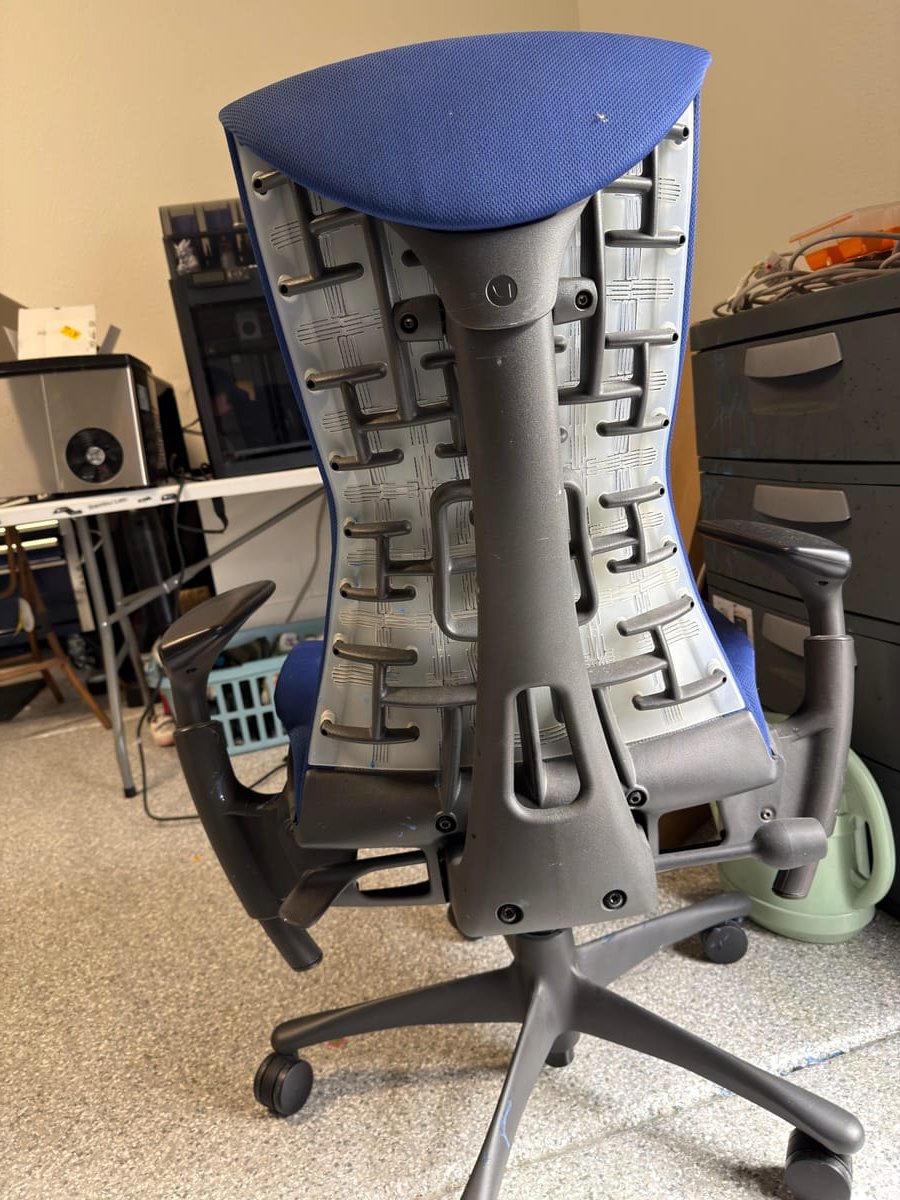
Is it the most cushiony seat ever? Not really—if you're coming from a plush executive chair, you'll notice the firmer support. But it's extremely supportive, extremely breathable, and extremely adjustable. After a two-week adjustment period, most users find they prefer it to traditional foam cushioning.
The Embody also wins on aesthetics. The Aeron looks like an office chair (a very nice one, but still obviously an office chair). The Embody looks like a piece of modern furniture that happens to be incredibly functional. If you're setting up a home office or a creative workspace, the Embody makes a statement.
Seat Depth Adjustability: Best in Class
One area where the Embody truly shines is seat depth adjustability. This is a feature that gets overlooked in many chair reviews, but it's crucial for long-term comfort and proper ergonomics.
Compared to chairs like the Haworth Fern—where extending the seat forward leaves your rear hanging off awkwardly in a gap between the seat and backrest—the Embody handles this beautifully. The seat pan slides forward and backward smoothly, and the transition between seat and back remains seamless at any depth setting.

The Embody probably has one of the best seat depth adjustabilities I've found in my testing, rivaled only by the Steelcase Gesture and Leap. For taller users (6' and above) or anyone with longer thighs, this feature alone might justify the price premium.
The adjustment mechanism is simple—a lever on the right side of the seat lets you slide the seat pan forward or backward while seated. You'll feel a satisfying click at each position, and the seat stays firmly locked once set.
The Armrest Situation: Good, Not Great
Here's one con I need to address honestly: the armrests are just okay. For some reason, Herman Miller doesn't make the best armrests across their entire lineup, and the Embody is no exception.
They're plenty adjustable—you can move them up/down, forward/backward, and pivot them inward/outward. The padding is adequate, though it's a harder plastic surface compared to the softer armrests on Steelcase chairs.
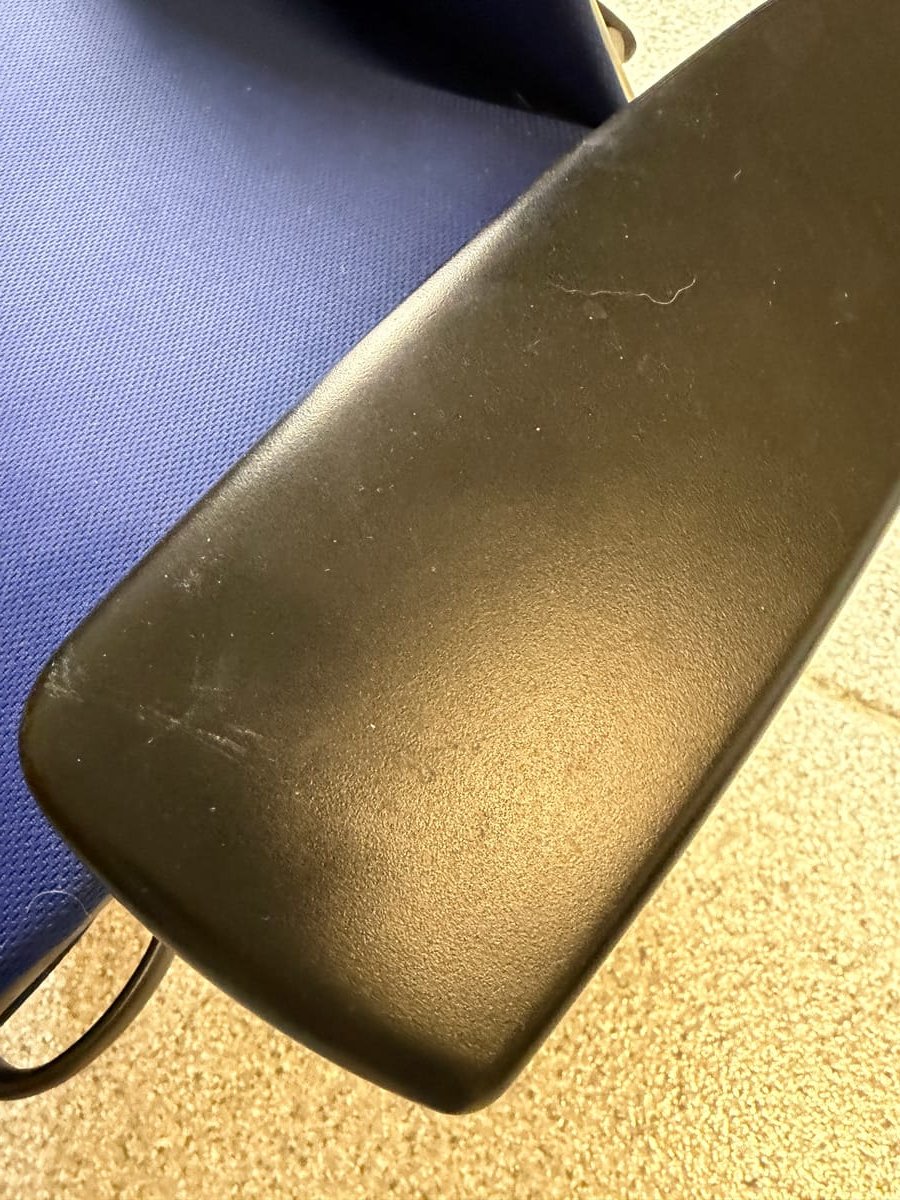
But here's the real issue: when you lean back, the armrests come with you. They're attached to the backrest, not the seat. This means if you recline to take a call or watch a video, your armrests rotate backward too.
Compare this to Steelcase chairs like the Leap or Gesture, where the armrests stay at a consistent height and angle regardless of your recline position. For users who frequently switch between upright typing and reclined thinking/reading positions, this can be frustrating.
Steelcase makes the best armrests when it comes to ergonomic chairs, full stop. If armrest quality is a top priority for you—especially if you're a gamer or someone who relies heavily on armrests for mouse support—keep this limitation in mind.
Build Quality & Materials: Premium Through and Through
The chair has standard Herman Miller build quality, which is to say: exceptional. Premium metal components, heavy-duty construction, and fit-and-finish that justifies the price tag. This chair is built to last not just years, but decades.
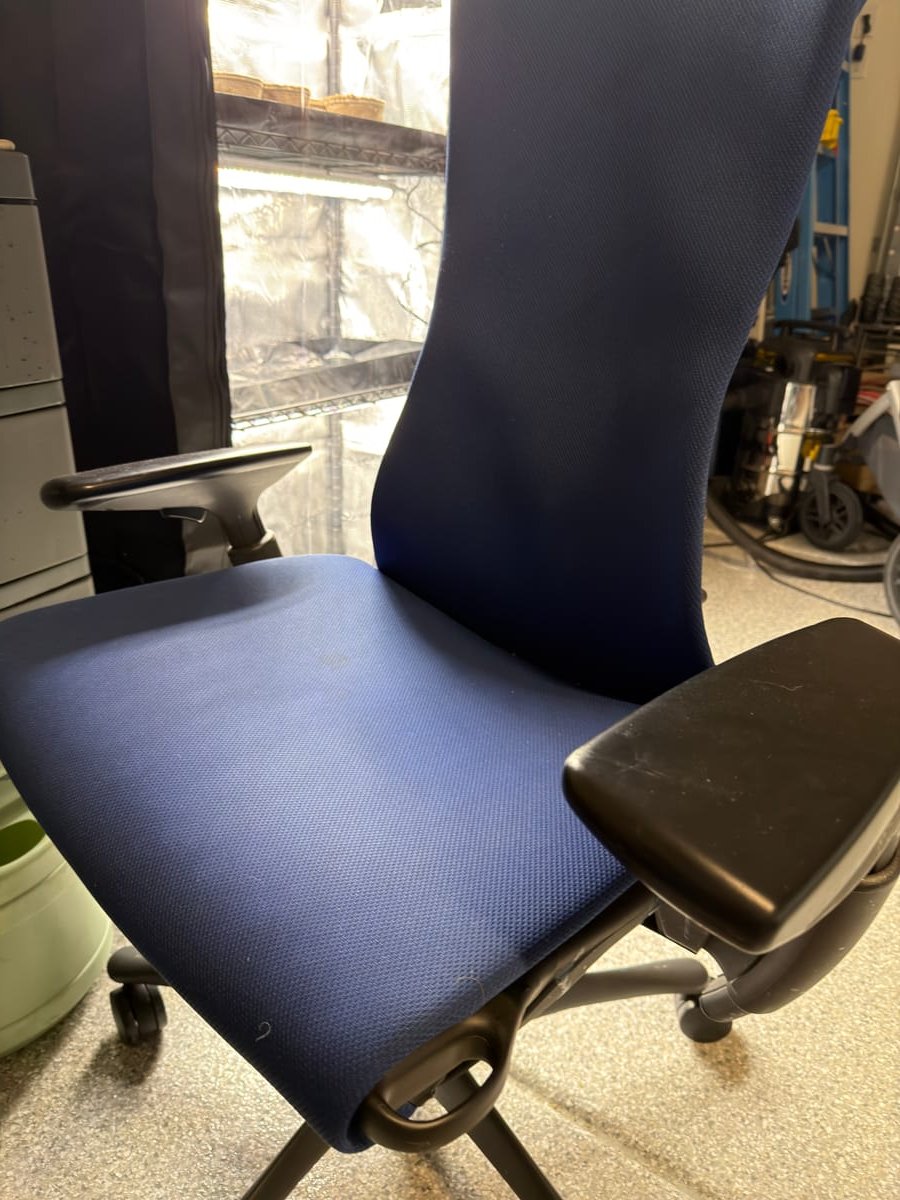
The frame is primarily aluminum and steel, with high-quality plastics used for the back and seat supports. Every adjustment mechanism feels solid and precise—there's no wobble, no play, no cheap-feeling components anywhere.
Herman Miller manufactures the Embody in the USA at their facilities in Michigan. This isn't just marketing—it means quality control is tight, replacement parts are readily available, and the company stands behind the product with their industry-leading 12-year warranty.
One thing to note about the fabric: the model I own (Sync fabric in a lighter color) tends to stain more easily than I'd like. Coffee drips, food crumbs, and general office grime show up readily. The good news is that the material is very breathable and can be cleaned with standard upholstery cleaners. Herman Miller offers different fabric options including their gaming-focused versions that use more stain-resistant materials.
For the best stain resistance, consider the darker colorways or opt for the Embody Gaming variant which uses their "Sync" fabric specifically treated for durability.
The Lumbar Problem: The Embody's Achilles Heel
Let's talk about the chair's one significant weakness: lumbar support. This is where the Embody genuinely falls short compared to competitors, and it's important to be upfront about it.
The back support adjustment works differently than traditional lumbar systems. There's a dial on the back that adjusts the "BackFit" system—essentially changing how much the chair's back curves to match your spine. But it's not the same as a dedicated lumbar pad that pushes into your lower back.
When you unspool the dial all the way, the backrest flattens out and you can feel the inner support structure more prominently. Dial it to maximum tightness, and the back curves more aggressively—but it creates an almost gap-like feeling in your middle back that some users find uncomfortable.
The top of the backrest can also dig into your upper back/shoulder area when you move side to side. This is less of an issue if you sit relatively still, but for users who shift positions frequently, it can be noticeable.
My experience after six years of daily use: The Embody feels really good for around 1-2 hours of focused work. The breathability is fantastic, the seat is supportive, and the overall experience is premium. But the longer I sit—especially in 4+ hour sessions—the more my lower back starts to ache.
If lumbar support is crucial for you, the Haworth Fern's lumbar is significantly better and more adjustable. The Steelcase Leap also offers more aggressive lower back support. But if you're someone who doesn't need intense lumbar pushing into your spine, the Embody's more neutral back support might actually be preferable.
You can buy aftermarket headrests from companies like Atlas, but the chair doesn't include one stock—a definite con for users who like to recline and rest their head during breaks.
Breathability: Where the Embody Dominates
If there's one category where the Embody is unquestionably best-in-class, it's breathability. This chair runs cool in ways that mesh chairs can only dream of.
The pixelated back design creates natural air channels that promote constant airflow. Unlike solid foam backs that trap heat, or even mesh backs that can still get warm at contact points, the Embody keeps you cool even during summer months without air conditioning.
For users in hot climates, warm offices, or anyone who tends to run hot, this is a massive advantage. I tested the Embody during July and August without AC in a home office, and the difference compared to my foam-backed chairs was immediately noticeable.
The seat, while more traditional in construction, also breathes reasonably well thanks to the thin, permeable fabric layers over the suspension system.
Who Should Buy This Chair?
After years of daily use, I can confidently recommend the Herman Miller Embody for users who:
- Prioritize breathability and staying cool above all else
- Need excellent seat depth adjustability for their body type
- Appreciate premium build quality and modern design
- Don't require intense, aggressive lumbar support
- Want a chair that will last 12+ years with warranty coverage
- Value high resale value if they upgrade later
- Work in shorter focused sessions rather than 8+ hour marathons
- Have the budget for a premium purchase
The Herman Miller Embody is my #1 rated chair overall.
Alternatives to Consider
Before pulling the trigger on the Embody, here are some alternatives worth considering:
Haworth Fern ($1,200+): Better lumbar support, lighter weight, excellent for tall users. Falls short on breathability and seat depth adjustment.
Steelcase Gesture ($1,400+): Best armrests in the business, great for multi-device users. Not as breathable, different aesthetic.
Herman Miller Aeron ($1,395+): The classic choice with excellent mesh breathability. Sizing can be tricky, frame can dig into thighs.
Steelcase Leap ($1,200+): Excellent lumbar, more traditional look. LiveBack technology adapts to your movements.
Final Verdict
The Herman Miller Embody scores 33 out of 55 on my 11-point scoring system, placing it as my #1 overall chair. But understand that this ranking reflects overall excellence across many categories, not perfection in every single one.
The Embody is a polarizing chair—people tend to either love it or find it doesn't work for their body. I strongly recommend trying one in person at a Herman Miller dealer before purchasing, or buying from a retailer with a good return policy.
For the right user, there's simply nothing else like the Embody on the market. Its combination of breathability, adjustability, build quality, and striking design make it a worthy flagship for Herman Miller's lineup and my top overall recommendation.